
Is My Loft Suitable for Conversion? A Complete Checklist for UK Homes
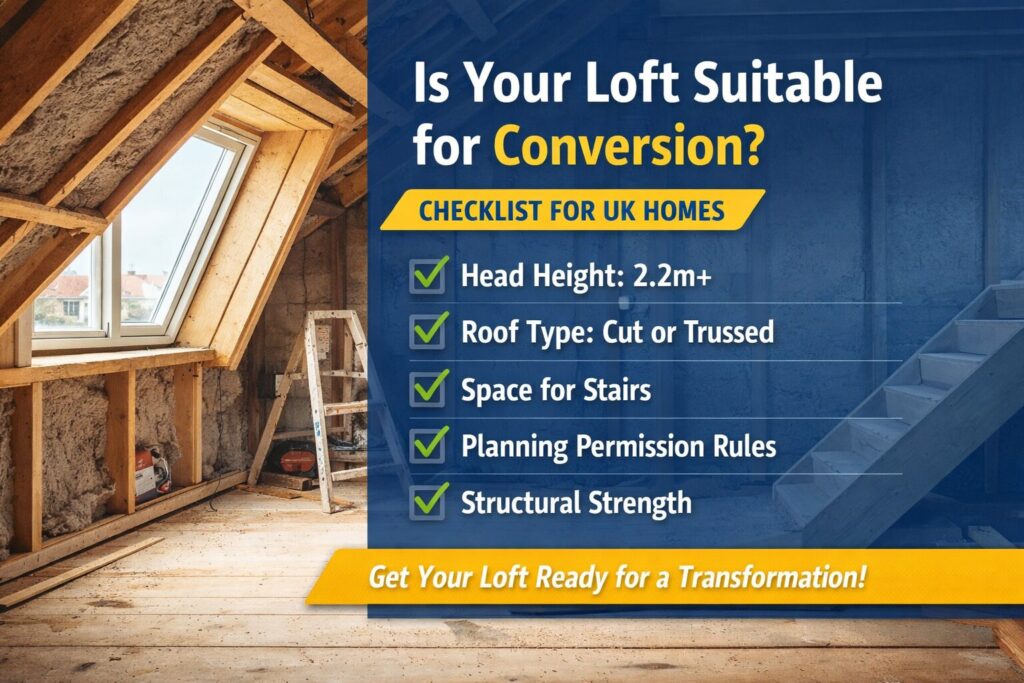
Loft conversions are one of the most effective ways to add extra space and increase the value of your home—especially in cities like London where moving can be costly and stressful. Whether you’re planning an extra bedroom, a home office, or even a rental space, the first question you need to answer is: Is your loft actually suitable for conversion? Not every loft is ready for transformation, but the good news is that many are—with the right approach. In this guide, we’ll walk you through a practical checklist used by professionals to determine whether your loft can be converted. Why Loft Suitability Matters Before you start designing or budgeting, it’s important to understand whether your loft can support a conversion. Getting this right early helps you avoid: A quick suitability check can save you time, money, and frustration later on. Loft Conversion Suitability Checklist 1. Check Your Head Height Head height is the most important factor in determining whether your loft is suitable. If your loft falls below this height, it may still be possible to convert—but it will likely require structural changes such as lowering ceilings or raising the roof, which increases costs. 2. Understand Your Roof Structure The type of roof you have plays a big role in how easy the conversion will be. Cut Roof (Traditional) Trussed Roof (Modern) 3. Assess Available Floor Space Even with good height, you need enough usable floor area. Ask yourself: A larger loft gives you more flexibility, whether you’re planning a master suite, workspace, or additional living area. 4. Check the Roof Pitch The steeper your roof, the more usable space you’ll have. A steep roof makes it easier to create a comfortable and functional room. 5. Consider Stair Access Access is essential for a safe and compliant loft conversion. You’ll need: In some cases, space-saving stair designs can be used, but standard stairs are always preferred for comfort and practicality. 6. Planning Permission and Regulations Many loft conversions fall under Permitted Development, meaning you may not need full planning permission. You typically won’t need permission if: However, planning permission is required if: Regardless, all loft conversions must comply with building regulations. 7. Check Structural Strength Your existing ceiling joists are not designed to support a living space. A conversion will require: A structural engineer will assess this and ensure everything meets safety standards. 8. Identify Obstacles Take note of anything in your loft that could affect the layout: These can often be relocated, but they may add to the overall cost. 9. Natural Light and Ventilation A well-designed loft should feel bright and comfortable. Popular options include: Natural light not only improves the living space but also adds value to your property. 10. Neighbour Considerations If your home is terraced or semi-detached, you may need a Party Wall Agreement before starting work. It’s always a good idea to: This helps prevent disputes and delays. When a Loft May Not Be Suitable In some cases, a loft may not be ideal for conversion. Common limitations include: However, these challenges don’t always mean a conversion is impossible. Solutions for Challenging Lofts If your loft doesn’t meet all the criteria, there are still several options: These options can transform even the most difficult lofts, though they may increase costs. Benefits of a Loft Conversion A loft conversion is more than just extra space—it’s a smart investment. Learn More About Loft Conversions If you’re considering a loft conversion in London, it’s important to understand the latest design trends and planning considerations. Explore this detailed guide on loft conversions London to get expert insights and inspiration:https://housemanage.co.uk/modern-house-extension-design-trends-in-london-2026-guide/ Final Thoughts Determining whether your loft is suitable for conversion is the first step toward unlocking your home’s full potential. If your loft has: …then you’re already in a strong position to move forward. Even if your loft presents some challenges, modern construction techniques and smart design solutions can often make a conversion possible. What to Do Next The best way to move forward is to get a professional assessment. An expert can evaluate your loft, recommend the best conversion type, and provide an accurate cost estimate based on your property. With the right planning, your unused loft can become one of the most valuable and enjoyable spaces in your home.