
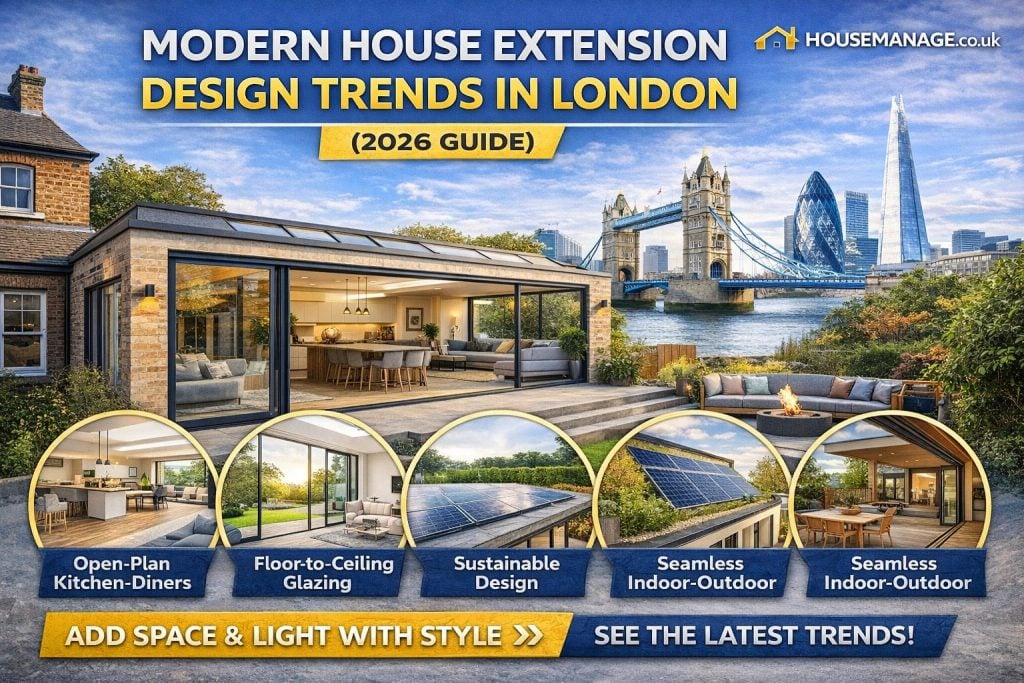
If you’re planning a house extension London, design matters just as much as budget and planning permission. In 2026, London homeowners are prioritising light, space, sustainability, and flexible living more than ever before. A modern extension is no longer just about adding square metres — it’s about transforming how your home feels and functions.
Whether you live in a Victorian terrace in Clapham, a semi-detached home in Barnet, or a townhouse in Hackney, understanding the latest design trends will help you maximise both lifestyle and property value.
For a complete overview of planning and costs, you can also read:
👉 https://housemanage.co.uk/the-complete-guide-to-house-extensions-in-london/
Why Modern Design Matters in a London House Extension
London homes often come with unique constraints:
- Narrow plots
- Period architecture
- Conservation area restrictions
- Limited natural light
A well-designed house extension London project must balance contemporary style with existing character — while complying with borough regulations.
Modern extensions today focus on:
- Seamless indoor-outdoor living
- Energy efficiency
- Multi-functional spaces
- Clean architectural lines
- Maximising natural light
Let’s explore the leading trends shaping London extensions in 2026.
1. Open-Plan Kitchen-Diner Extensions
The most requested extension style across London remains the open-plan kitchen-diner.
Homeowners are removing rear walls and creating large, flowing spaces that combine:
- Kitchen
- Dining area
- Lounge space
- Garden access
Bifold or sliding doors opening onto patios are now considered standard in modern rear extensions.
Why this trend dominates:
- Perfect for entertaining
- Creates visual space in narrow homes
- Adds significant resale value
- Makes terraced homes feel wider
In many house extension London projects, the kitchen becomes the central hub of the home.
2. Floor-to-Ceiling Glazing and Roof Lanterns
Natural light is a major priority in London homes, especially in terraced properties where side windows are limited.
Popular glazing features include:
- Slimline aluminium sliding doors
- Frameless corner glazing
- Roof lanterns
- Flat roof skylights
- Structural glass walls
Modern design embraces contrast — brick exterior paired with minimalist black-framed glazing is especially popular in South and East London.
However, in conservation areas, glazing designs must align with local planning policies. Always check borough-specific rules before committing.
3. Side Return Extensions for Victorian Homes
Victorian and Edwardian terraces dominate many London boroughs. These properties often have unused side alleyways — ideal for side return extensions.
Modern side return trends include:
- Zinc or aluminium roofs
- Exposed brick interior feature walls
- Polished concrete flooring
- Industrial-style lighting
Side return extensions are particularly popular because they:
- Require less garden space
- Often fall under permitted development
- Dramatically improve kitchen layout
For tailored guidance, explore professional house extension London services that specialise in period property adaptations.
4. Sustainable & Energy-Efficient Design
Sustainability is no longer optional — it’s expected.
In 2026, modern extensions in London frequently include:
- Triple-glazed windows
- Underfloor heating
- Air source heat pumps
- Solar panels
- High-performance insulation
- Green roofs
Energy-efficient extensions reduce long-term bills and improve EPC ratings — a major factor for resale value.
Many London boroughs are also encouraging low-carbon building methods as part of planning approval.
5. Seamless Indoor-Outdoor Living
Post-pandemic lifestyle shifts have made outdoor integration a top design priority.
Modern trends include:
- Level thresholds (no step between inside and outside)
- Porcelain tiles flowing from interior to patio
- Outdoor kitchens
- Covered pergola areas
- Large pocket sliding doors
Even small London gardens can feel significantly larger when designed as an extension of the interior living space.
6. Double-Storey Extensions with Minimalist Aesthetic
Double-storey extensions remain popular for families needing extra bedrooms or home offices.
In 2026, the design trend leans toward:
- Clean rectangular forms
- Flat roofs with parapets
- Large window openings
- Brickwork matching the original house
London planners typically prefer designs that complement the existing property rather than ultra-modern contrasts on period homes.
A professional house extension London design team will ensure the structure aligns with both aesthetics and planning guidelines.
7. Basement Extensions (Where Space Is Limited)
In central London boroughs such as Kensington, Chelsea, and Islington, basement extensions remain a solution for properties where outward expansion isn’t possible.
Modern basement trends include:
- Sunken courtyards
- Light wells
- Glass floor panels
- Cinema rooms
- Gym spaces
- Utility zones
However, basement projects are complex and require specialist engineering.
Planning regulations are stricter for basements due to structural and drainage considerations.
8. Home Office & Multi-Functional Spaces
Hybrid working continues to influence extension design.
Modern London extensions now incorporate:
- Built-in desk areas
- Acoustic insulation
- Sliding partitions
- Hidden storage
- Flexible guest rooms
Rather than separate formal dining rooms, homeowners prefer adaptable spaces that evolve with lifestyle needs.
9. Contemporary Materials & Textures
Material choices define the character of a modern extension.
Trending materials in 2026 include:
- London stock brick (to blend with original facades)
- Charred timber cladding
- Zinc roofing
- Polished concrete
- Microcement finishes
- Oak and natural wood tones
The contrast between traditional brick exteriors and sleek contemporary interiors remains highly desirable.
10. Smart Home Integration
Modern extensions increasingly include smart technology such as:
- App-controlled lighting
- Smart thermostats
- Automated blinds
- Integrated sound systems
- Security cameras
Incorporating these features during the build phase is more cost-effective than retrofitting later.
Planning Considerations for Modern Extensions in London
Before embracing bold design ideas, remember:
- Conservation areas restrict visible modern alterations
- Listed buildings require additional consent
- Borough-specific guidelines vary
- Neighbour objections can delay planning
To avoid costly mistakes, it’s essential to understand regulations before finalising design plans.
For a broader overview of legal and planning processes, read:
👉 https://housemanage.co.uk/the-complete-guide-to-house-extensions-in-london/
How Much Do Modern Extensions Cost in London?
Design trends impact cost.
As of 2026:
- Standard rear extension: £2,200 – £3,500 per m²
- High-spec modern design: £3,500 – £4,500+ per m²
- Basement extension: £4,000 – £7,000 per m²
Features that increase cost:
- Structural glazing
- Bespoke joinery
- Smart home systems
- Premium flooring
- Complex steelwork
For accurate pricing based on your borough and design vision, consult specialists in house extension London projects.
Balancing Modern Style with Property Value
One common mistake London homeowners make is over-modernising beyond the local market.
Before committing to a bold architectural style, consider:
- Street character
- Neighbouring property values
- Ceiling price in your postcode
- Buyer expectations in your borough
A well-designed extension should enhance value — not limit resale appeal.
Key Design Tips for a Successful London Extension
✔ Maximise natural light
✔ Keep structural layout simple
✔ Match brickwork carefully
✔ Plan storage early
✔ Consider future resale
✔ Prioritise energy efficiency
✔ Work with experienced London professionals
Final Thoughts: Designing a Modern House Extension in London
A successful house extension London project in 2026 blends style, practicality, and compliance. Modern trends focus on light-filled spaces, sustainable materials, flexible layouts, and seamless garden integration — all while respecting London’s unique architectural character.
Whether you’re planning a side return in Wandsworth, a rear extension in Hackney, or a double-storey addition in Barnet, thoughtful design will determine both your enjoyment and your return on investment.
And for a full overview of planning, budgeting, and timelines, don’t miss:
👉 https://housemanage.co.uk/the-complete-guide-to-house-extensions-in-london/
With the right design approach, your extension won’t just add space — it will redefine how you live in your London home.